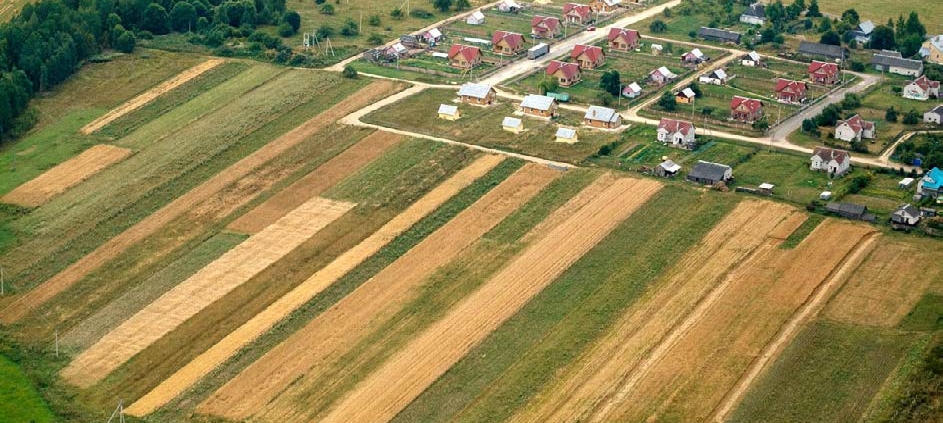
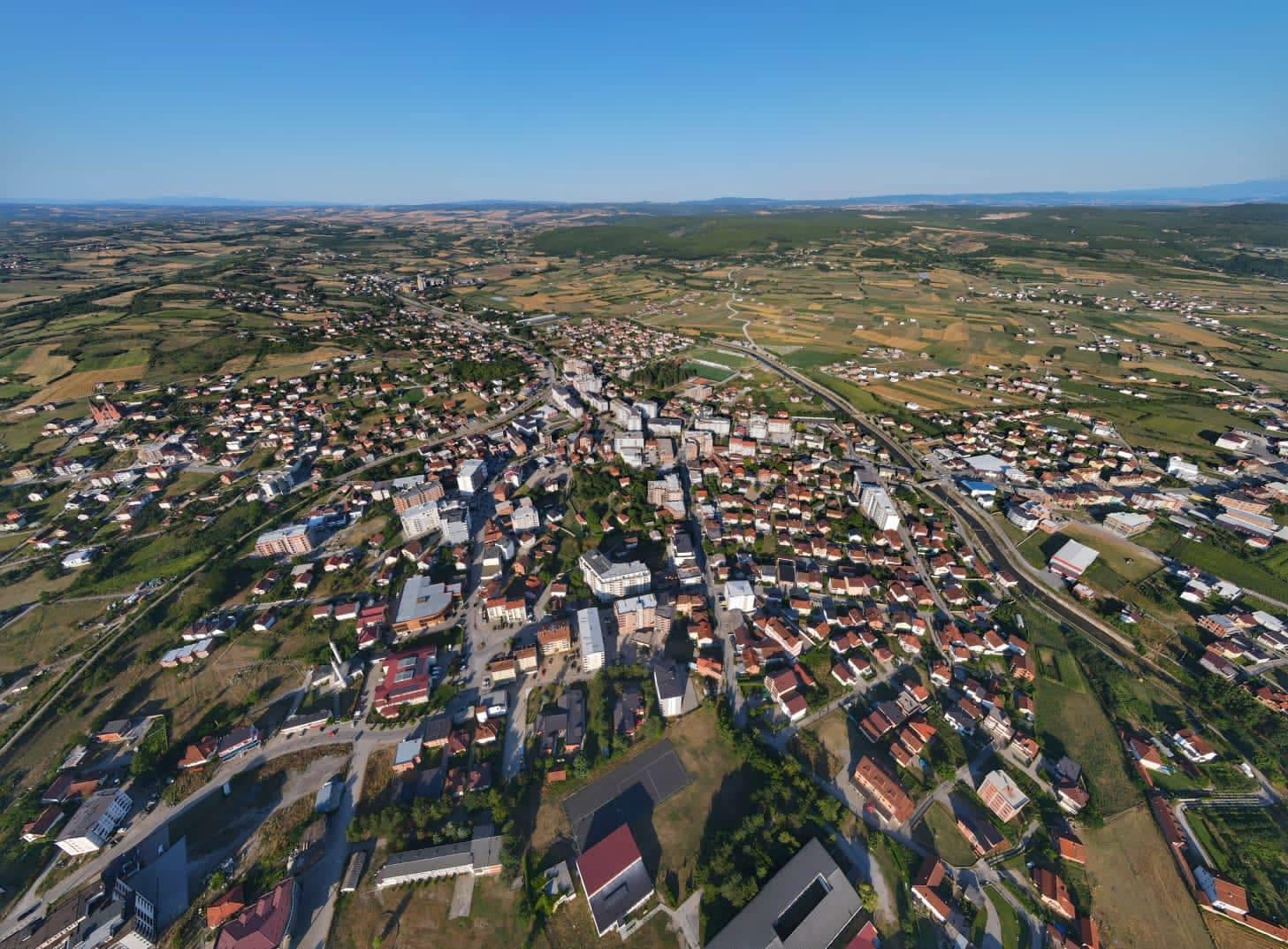
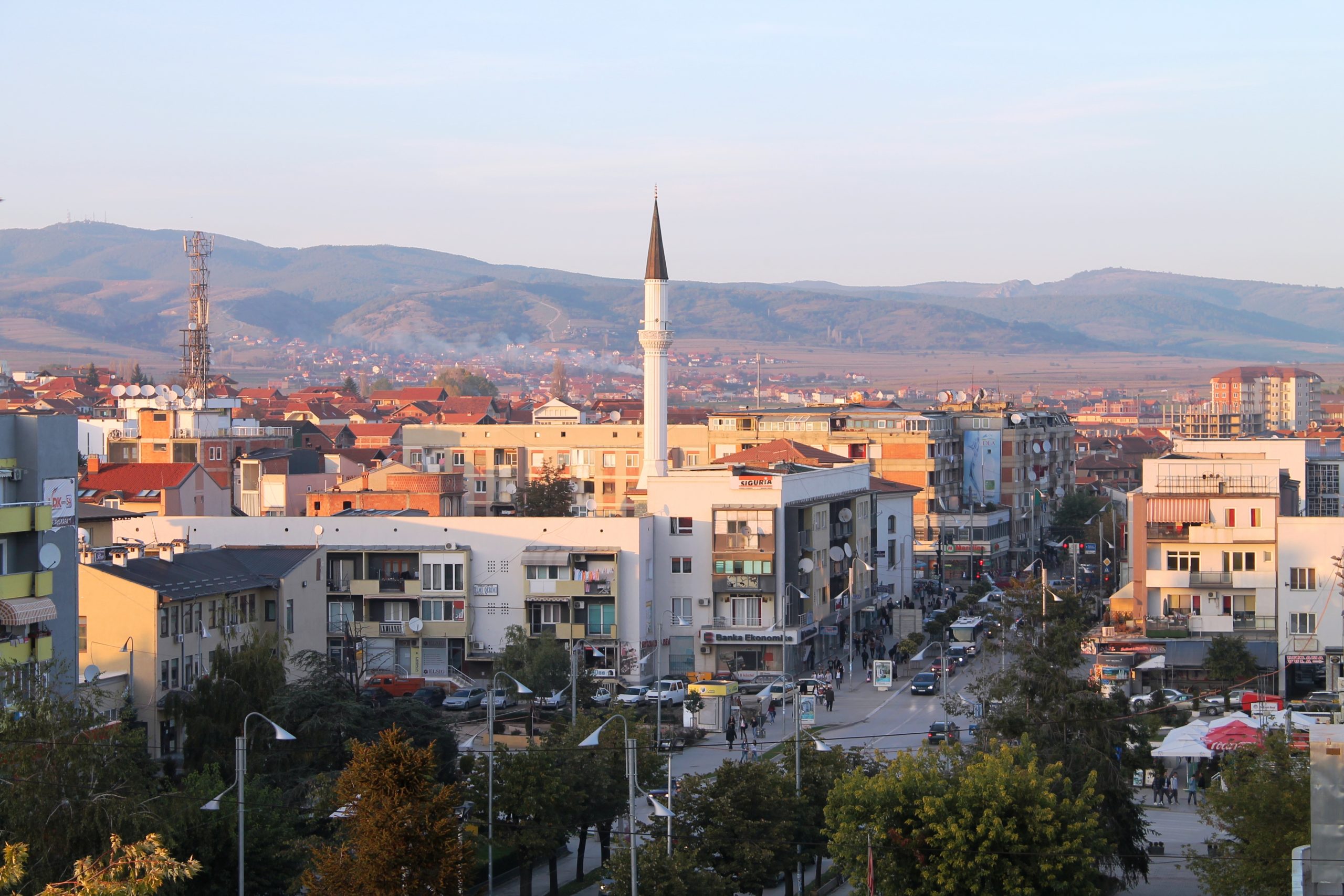
Rural Development Indicators represent a comprehensive assessment tool designed to support planners, municipal managers, and policymakers in evaluating the socio-economic, environmental, spatial, and infrastructural conditions of rural areas. These indicators enable the measurement and monitoring of key development factors, including demographic trends, land use patterns, migration, infrastructure availability, mobility, governance frameworks, waste management systems, environmental pressures, and citizens’ access to essential services. By identifying existing challenges, development pressures, and territorial disparities, the indicators provide a foundation for evidence-based decision-making, targeted interventions, and the monitoring of sustainability outcomes.
Within the framework of this assessment, eight municipalities of Kosovo—Prishtina, Mitrovica, Ferizaj, Gjilan, Gjakova, Peja, Prizren, and Vushtrria—are evaluated through a set of 30 indicators, organized into six thematic groups: (1) Rural Population and Migration, (2) Social Well-being and Equity in Rural Areas, (3) Economic Structure in Rural Areas, (4) Planning for Rural Development, (5) Environment and Sustainability, and (6) Infrastructure and Mobility.
The Rural Population and Migration indicators assess population dynamics, rural population density, age structure, household characteristics, and migration trends, providing insight into demographic changes and related development challenges. The Social Well-being and Equity in Rural Areas indicators evaluate living conditions and accessibility to essential services, including income levels, housing conditions, education, healthcare, public services, safety, and water supply. The Economic Structure in Rural Areas indicators focus on the role of agriculture and other economic sectors, agricultural subsectors, labour force characteristics, employment, and unemployment trends. The Planning for Rural Development indicators examine the existence and effectiveness of rural development strategies, public participation processes, institutional capacities, available resources, and mechanisms for monitoring and evaluation. The Environment and Sustainability indicators address land use patterns, soil and water resources, biodiversity, air quality, waste recycling, and wastewater treatment. Finally, the Infrastructure and Mobility indicators assess transport patterns, basic infrastructure provision, public transport accessibility, and pedestrian and cycling safety.
Following the evaluation process, municipality-specific recommendations, strategic guidelines, and action plans will be developed to address identified challenges and opportunities. These recommendations will be aligned with existing municipal development documents to ensure coherence and effective implementation. The progress and impact of the proposed interventions will be monitored over a three-year period following their adoption, allowing municipalities to evaluate results, improve implementation processes, and support long-term sustainable rural development.